Why Boundary Clarity Matters in Water Work
Many water-right problems begin as location problems. A landowner may know where a fence line runs or where water has historically been used, but that is not the same as having a legally defensible boundary or a surveyed location for improvements. When a project involves a well, diversion point, easement, pipeline, or mapped place of use, boundary uncertainty can delay planning, create neighbor disputes, or complicate later filings. In Oregon, land surveying is a regulated profession, and the state states that it exists to safeguard life, health, and property through competent licensed practice.
Why Licensed Boundary Work Matters
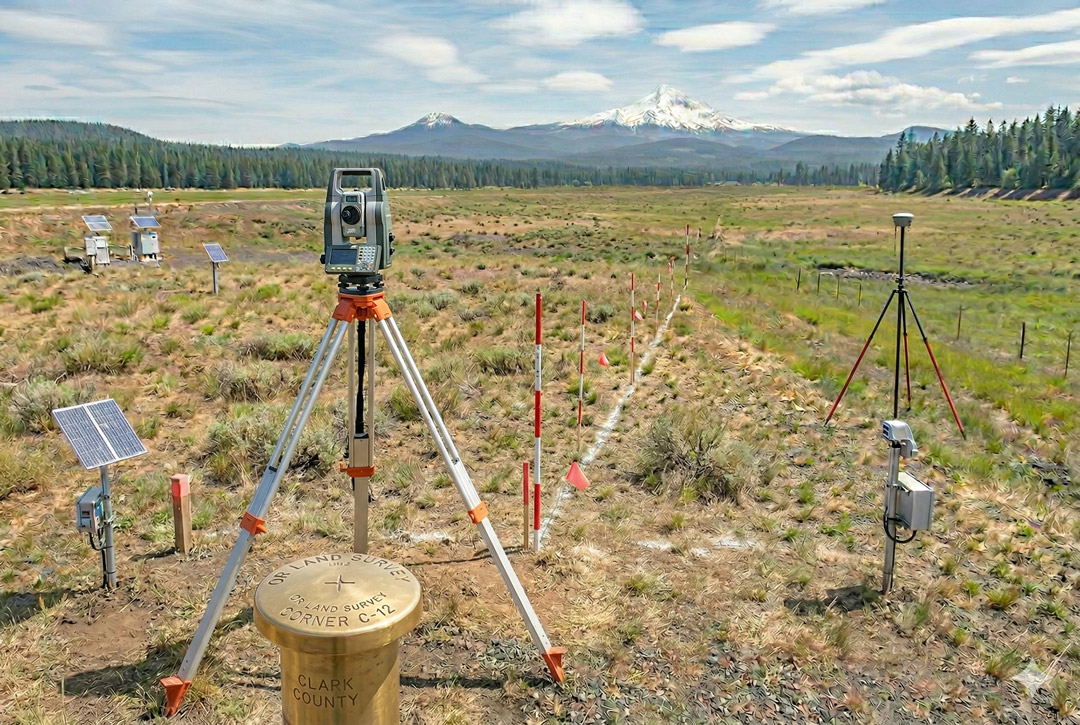
Oregon distinguishes boundary surveying and monumentation from more general layout work. State construction guidance states that a licensed land surveyor must be in responsible charge of boundary surveying or monumentation. That distinction matters for landowners because property corners, line recovery, line marking, and formal location work affect legal rights, not just convenience. When a boundary question is tied to a water-related improvement, the quality of that survey work can shape everything that follows, from siting and access to future water-right documentation.
Where Landowners Feel This Problem Most
Boundary and location services are especially useful where owners are planning new wells, confirming existing water infrastructure, locating property corners before construction, or trying to understand how a place of use fits on the ground. The same is true when a parcel changes hands and the buyer wants certainty about wells, pipelines, diversions, and neighboring lines before investing further. Oregon’s survey and monumentation standards reflect the importance of locating and preserving accurate reference points, not just drawing a map after the fact.
A Practical Message for Landowner Outreach
For landowners, the service is not just surveying. It is reducing uncertainty before a water project, property transaction, or boundary dispute becomes more expensive. Positioning boundary surveying, line marking, and location services as the first step in water-focused planning speaks to a real problem: owners need to know where the line is, where the corner is, and where the water system sits in relation to both. That message also stays close to Oregon’s regulatory framework, which treats boundary and monumentation work as licensed professional services tied directly to protection of property.