
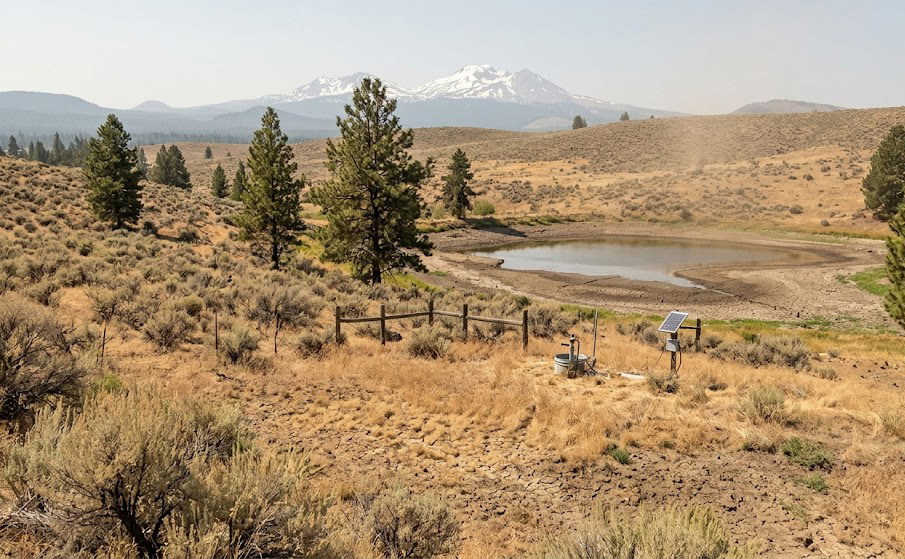
Oregon is facing potentially extraordinary drought conditions in 2026, driven by historically low snowpack, a warm winter, and precipitation deficits extending across multiple years. For well owners, the effect may appear as lower water levels, reduced flow, longer pump cycles, or a well that no longer meets normal demand. Monitoring before the well fails can provide useful information about whether the problem involves the aquifer, the pumping system, or both.
Water-Level Measurements Show How Groundwater Conditions Are Changing
A static water-level measurement records the depth to water when the well is at rest and is not being influenced by pumping. Repeating that measurement under comparable conditions can show whether groundwater levels are stable, seasonal, or declining.
One measurement offers a snapshot. A series of measurements provides a trend. Oregon emphasizes that long-term water-level records are important for distinguishing seasonal and climatic effects from changes associated with groundwater development. Many groundwater permits also require periodic static water-level measurements and reporting.
A Well Flow Test Evaluates Performance Under Pumping
A flow test adds a different type of information. During the test, the pumping rate, pumping water level, drawdown, and recovery are observed. These measurements help show how the well performs while water is being withdrawn and how quickly the water level recovers after pumping stops.
Important measurements may include:
- Static water level before pumping begins
- Discharge rate during the test
- Pumping water level
- Total drawdown
- Recovery after the pump is turned off
- Meter and pump performance
- Changes compared with earlier test results
Oregon’s Water Well Owner’s Handbook explains that static level, pumping level, and pumping rate are needed to evaluate well performance. A well producing less water than expected has not necessarily gone permanently dry. Pump condition, system leaks, well construction, and reduced aquifer yield may all need to be considered.
Early Testing Can Separate Well Problems From Aquifer Problems
Reduced water at the tap does not always mean the groundwater source has failed. A worn pump, pressure-tank problem, clogged screen, electrical issue, or leak may create similar symptoms. Water-level and flow data help narrow the possibilities before an owner commits to major repairs or replacement.
Comparison is especially valuable. A deeper static level may point toward changing groundwater conditions, while greater drawdown at a similar static level may indicate a performance issue within the well. A flow test and water-level measurement do not answer every question, but they provide a stronger basis for deciding what to investigate next.
Reporting a Dry Well May Support Broader Assistance
OWRD asks owners to report dry wells because the information helps scientists and water managers understand groundwater impacts. Reporting may also allow the Department to notify an owner about assistance available in the area. Oregon’s Well Abandonment, Repair and Replacement Fund may assist qualifying households with dry or severely declining wells in counties covered by a 2026 drought declaration, subject to program requirements and available funding.
Establishing a Baseline Before Conditions Get Worse
Well monitoring is most useful before a complete loss of supply. Measuring the static level, testing flow, documenting recovery, and keeping dated records can reveal changes that would otherwise go unnoticed. The same information may also support permit reporting, property evaluations, future water planning, or discussions with pump installers and well constructors.
Water Rights Pro provides water-level measurements, well flow testing, and ongoing well monitoring for Oregon property owners, farms, public entities, and other groundwater users. A documented baseline gives owners clearer information for maintenance and planning during a difficult water year.